
Fire Prevention Week concluded just over a week ago.
It is always beneficial to reemphasize the importance of smoke alarms and their life-saving potential.
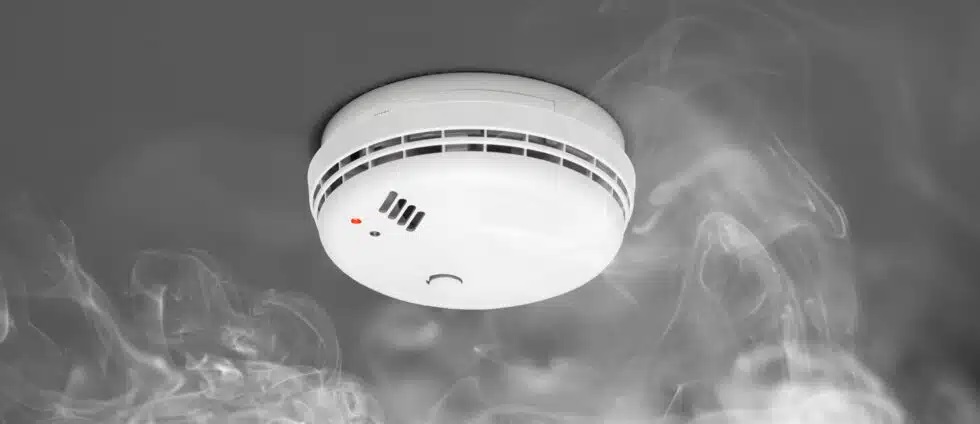
Smoke alarms are essential safety devices designed to detect smoke and alert occupants to the presence of a fire.
These alarms work by sensing either smoke particles or changes in temperature, depending on the type,
and then emitting a loud sound to warn residents of potential danger.
Facts
– You could have as little as two minutes to get out safely once the smoke alarm sounds.
Working smoke alarms give you early warning so you can get outside quickly.
– Working smoke alarms cut the risk of dying in a home fire in half.
Installation
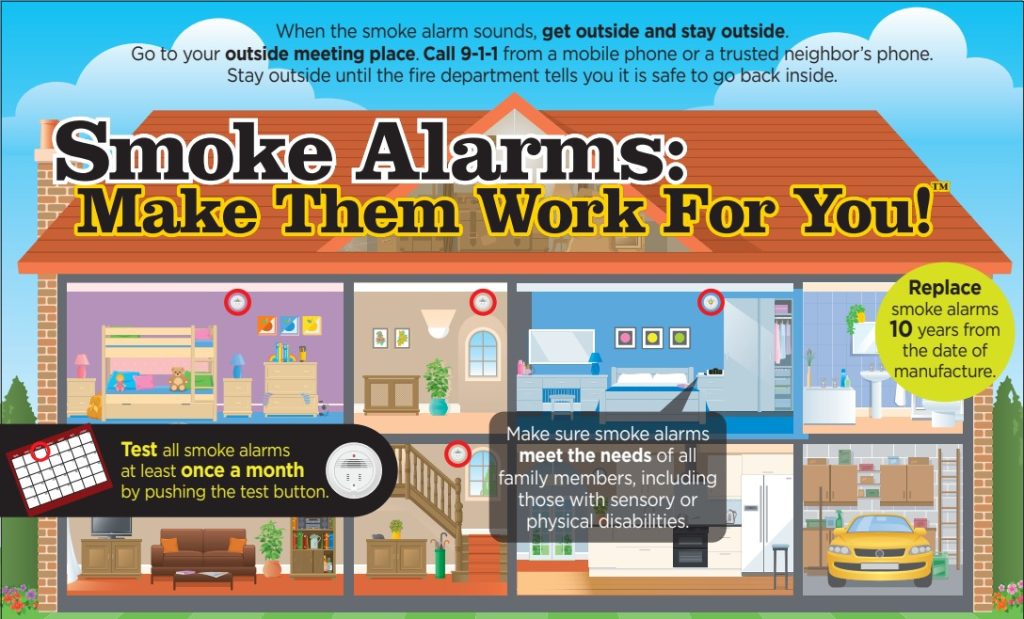
– Install smoke alarms in every bedroom, outside each separate sleeping area (like a hallway),
and on each level (including the basement) of the home.
– When installing, follow the instructions that come with the smoke alarm.
– For the best protection, interconnect all smoke alarms. When one sounds, they all sound.
It is important to have interconnected smoke alarms if you sleep with the bedroom doors closed.
– A smoke alarm should be on the ceiling or high on a wall.
– Make sure smoke alarms meet the needs of all family members, including those with sensory or physical disabilities.
How to Choose an Alarm
It is important to purchase a smoke alarm that is listed by a qualified testing laboratory.
The two most common types of smoke alarms are ionization and photoelectric.
– For the best protection or where extra time is needed to wake up or help others, both types or dual sensor ionization-photoelectric alarms are recommended.
– An ionization smoke alarm is more responsive to flaming fires, and a photoelectric smoke alarm is more responsive to smoldering fires.
– Photoelectric smoke alarms are the best type of alarms to be installed near the kitchen and bathrooms to reduce nuisance alarms.
Testing and Maintenance
Test smoke alarms at least once a month by pushing the test button.
Follow the manufacturer’s instructions for cleaning to keep smoke alarms working.
The instructions are included in the package or can be found on the internet.
– Smoke alarms with non-replaceable (long-life) batteries are designed to remain effective for up to 10 years.
If the alarm chirps, warning that the battery is low, replace the entire smoke alarm right away.
– For smoke alarms that do not have non-replaceable (long-life) batteries, replace batteries at least once a year.
If the alarm chirps, replace only the battery.
Replacement
Age matters when it comes to smoke alarms.
All smoke alarms need to be replaced when they are 10 years old or if they don’t respond when tested.
The above information is brought to you by National Fire Protection Association (NFPA).
For more fire safety information, visit fpw.org .
Smoke alarm is an essential unit in terms of home inspection, especially for homes with gas appliances.
If you have concerns about smoke alarms or other safety aspects of your home, please contact us to schedule a home inspection.